George Washington University sits at the intersection of policy, research, and urban life — a magnet for students who want classroom rigor paired with real-world access. Located steps from federal agencies, international organizations, and cultural institutions, the campus turns proximity into opportunity: internships, guest speakers, and policy briefings are part of the academic ecosystem, not extras.
Academic strengths and signature schools
The university’s strengths are broad: international affairs and public policy programs attract students aiming for government or diplomatic careers; the business school emphasizes global markets and experiential learning; the law school offers clinics and externships that place students inside courts and agencies; engineering and applied sciences combine hands-on labs with industry partnerships; public health and medicine focus on community health and research. Interdisciplinary programs and research centers bridge these areas, supporting projects from cybersecurity to climate resilience.
Career edge and networking
A powerful selling point is the steady pipeline to internships and jobs. Proximity to Capitol Hill, federal departments, major nonprofits, and consulting firms gives students direct exposure to policy-making and industry leaders.
Career services support résumé refinement, interview prep, and employer connections. For students serious about public service, the alumni network includes professionals in government, NGOs, media, and global institutions who can open doors for internships and full-time roles.
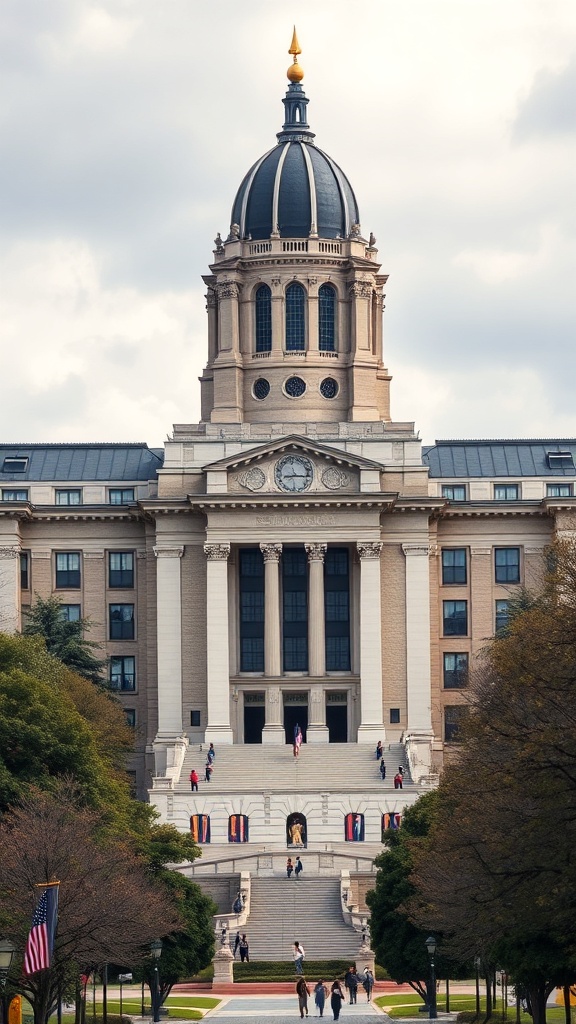
Campus life and culture
Campus life blends urban energy with a compact residential experience. Student organizations cover political debate, cultural affinity, entrepreneurship, performing arts, and service learning — creating a social scene as diverse as the student body. Public lectures, policy panels, and cultural events frequently bring prominent speakers and visiting fellows to campus, providing informal learning beyond course syllabi.
Practical access and mobility
Transportation is straightforward: nearby Metro lines, bike lanes, and pedestrian routes make the city accessible for commuting, internships, and weekend exploration. The campus sits among museums, theaters, and international dining — ideal for students who want academic vigor without sacrificing cultural immersion.
Research and innovation
Research centers on campus tackle pressing challenges: health disparities, cyber policy, international development, and sustainable urban design. Undergraduates and graduate students can join faculty-led projects and labs, gaining research experience that strengthens graduate school or career applications.
Admissions and fit-focused advice
Prospective applicants should show clear alignment between their interests and the university’s offerings.
Highlight internships, civic engagement, language skills, and specific faculty or centers you’d work with. Strong recommendation letters and a concise, reflective personal statement matter. Visit the campus, sit in on a class or public lecture, and connect with current students or alumni to assess fit.
Student support and wellbeing
Academic advising, tutoring centers, mental health resources, and career counseling are core supports available to students. Housing options include on-campus halls and university-affiliated apartments, which help first-year students form community while giving upperclassmen flexibility near internship hubs.
Community impact and sustainability
Sustainability programs, community partnerships, and service initiatives integrate civic responsibility with academic work. Students often participate in local public health campaigns, neighborhood planning efforts, and environmental projects — translating classroom theory into measurable impact.
Is it the right choice?
For students seeking a rigorous education tied to policy, global affairs, health, law, or urban innovation — and who value hands-on experience in a major political and cultural capital — the university offers a compelling mix of opportunity, connections, and resources. Start by identifying programs that match your goals, visit campus to feel the community, and plan internships early to maximize the unique advantages that come from studying at the heart of the action.