The Lincoln Memorial is one of the most visited and photographed monuments on the National Mall, blending powerful symbolism, classical architecture, and a role as a gathering place for civic life. Understanding what to look for and why the site matters enhances any visit, whether you’re a first-time traveler or a repeat visitor.
Why the memorial matters
Designed as a temple to honor the legacy of Abraham Lincoln, the memorial serves as both a tribute to a pivotal leader and a stage for civic expression. The site has hosted landmark public gatherings and remains a powerful backdrop for speeches, vigils, and celebrations that connect American ideals with collective memory.
Architecture and symbolism
The exterior resembles a Greek Doric temple, with a ring of 36 columns representing the states of the Union at the time of Lincoln’s death.
Climb the broad marble steps and you’re met by the massive seated statue of Lincoln, a contemplative figure carved to convey dignity and resolve. Above the statue, an inscription praises Lincoln’s service to the nation and frames the space as a place of national remembrance.
Inside the memorial, two of Lincoln’s most famous texts are carved on the walls: the Gettysburg Address and his Second Inaugural Address. These short but profound speeches are reminders of unity, sacrifice, and the ongoing work of the republic. The reflective atmosphere inside makes it a powerful place to pause, read the words, and consider their continuing relevance.
What to see and photograph
– The seated Lincoln statue: Look for the sculptor’s attention to expression and proportion; the statue’s scale is designed to be impressive without overwhelming the viewer.
– Inscriptions: Read the Gettysburg Address and Second Inaugural Address on the interior walls for context and emotional resonance.
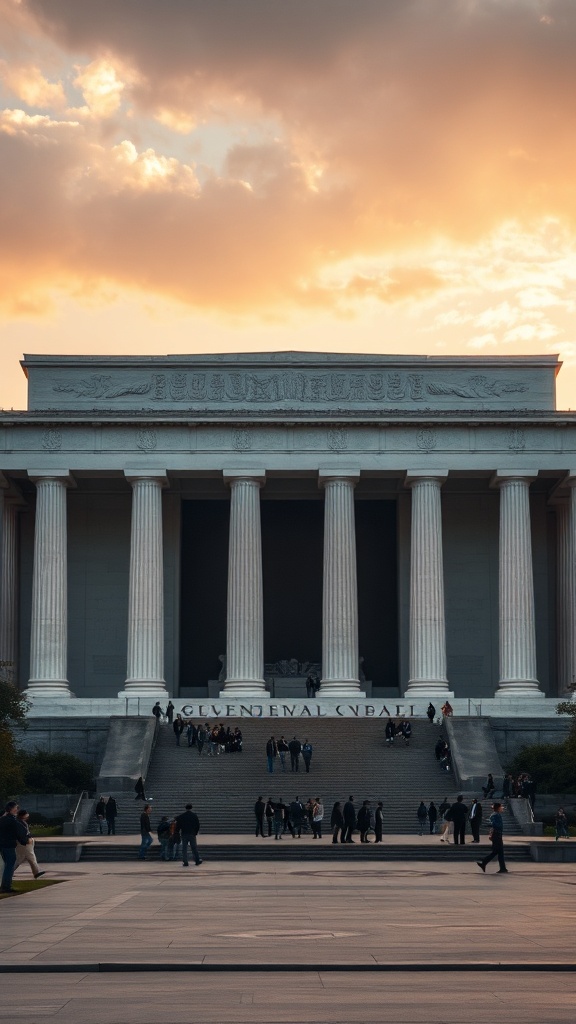
– Reflecting Pool and Washington Monument views: From the memorial steps you get one of the iconic perspectives of the National Mall—especially striking at dawn or after dark.
– Frieze and reliefs: Note small details such as the names of the states and symbolic decorative elements that reinforce the memorial’s themes.
Visiting tips
– Timing: Early morning or late evening offers softer light for photos and fewer crowds. The memorial is often illuminated at night, creating a different, quieter mood ideal for contemplative visits.
– Accessibility: Ramps and pathways provide access for visitors with mobility limitations; check official visitor resources for the latest accessibility services.
– Respectful behavior: The memorial is both a tourist destination and a site of remembrance. Maintain a quiet, respectful demeanor, especially inside the chamber.
– Nearby sites: Pair a visit with stops along the National Mall—the Reflecting Pool, nearby monuments, and museums make for a full and meaningful day.
Conservation and stewardship
Ongoing preservation and maintenance protect the marble and inscriptions from weathering and wear, while interpretation efforts help new generations understand the memorial’s significance. Learning about conservation work can deepen appreciation for the craftsmanship and care that keep the site accessible.
Why return
Even after multiple visits, the Lincoln Memorial continues to offer new perspectives.
Light, crowd flow, seasonal changes, and special events all alter the experience, providing fresh impressions each time you go. Whether you’re there for history, architecture, photography, or quiet reflection, the memorial remains a focal point for exploring national identity and public memory.