The Lincoln Memorial stands as one of the most recognizable monuments on the National Mall, a powerful blend of architecture, art, and civic memory that draws millions of visitors each year.
Located at the western end of the Mall, the memorial honors Abraham Lincoln, the 16th President of the United States, and serves as a focal point for reflection on national ideals like unity, freedom, and equality.
Design and symbolism
Modeled after a Greek Doric temple, the memorial’s exterior features 36 massive columns—each representing a state in the Union at the time of Lincoln’s death.
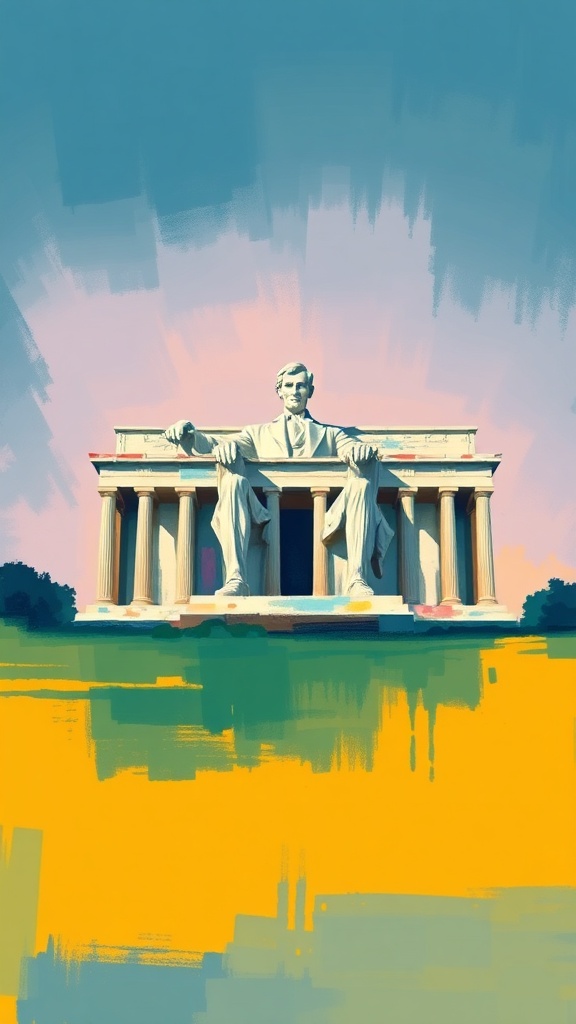
The columns surround a grand chamber that houses a seated marble statue of Lincoln sculpted by Daniel Chester French. The statue’s scale is deliberately monumental; its contemplative pose and careful proportions invite quiet reflection.
Above the statue and carved into the interior walls are two of Lincoln’s most famous speeches: the Gettysburg Address and the Second Inaugural Address. A prominent inscription above the chamber reads: “IN THIS TEMPLE AS IN THE HEARTS OF THE PEOPLE FOR WHOM HE SAVED THE UNION THE MEMORY OF ABRAHAM LINCOLN IS ENSHRINED FOREVER.” These words, along with the architecture, create a deliberate atmosphere of solemn remembrance.
Civil rights and public gatherings
The memorial’s steps have long been a stage for public expression and civil rights activism.
One of the most iconic moments in American history took place on these steps, when a major civil rights leader delivered a speech that called for equality and justice, turning the site into a symbol of the ongoing struggle for civil rights. Since then, the memorial remains a gathering place for rallies, vigils, and commemorations that continue to shape the nation’s civic life.
Conservation and preservation
Preserving the memorial requires ongoing conservation efforts. The structure is primarily built of marble and limestone, materials that are vulnerable to pollution, weathering, and visitor wear.
National park stewards and conservators regularly assess the monument, conduct stabilization and cleaning projects, and implement measures to protect sensitive surfaces while maintaining public access.
Visitors are part of conservation too—respectful behavior helps reduce wear and protects inscriptions and sculptures for future generations.
Practical tips for visitors
– Timing: Early mornings and late evenings are ideal for fewer crowds and softer light for photography. Nighttime illuminations highlight the architecture and the view across the Reflecting Pool toward the Washington Monument.
– Access: The memorial is accessible via public transit and is designed to accommodate wheelchairs; check official National Park Service resources for the latest accessibility information and visitor services.
– Etiquette: The site is both a tourist destination and a memorial—quiet, respectful behavior is appreciated during reflective moments and ceremonies.
– Nearby attractions: The memorial sits within easy walking distance of other landmarks along the Mall, making it an efficient stop on a broader sightseeing route.
Why it matters
Beyond its architectural grandeur, the memorial functions as a living symbol of national memory.
It invites repeated visits—each experience shaped by personal reflection, historical awareness, and the dynamic events that continue to unfold on its steps.
For visitors seeking history, photography opportunities, or a contemplative space in the heart of the capital, the Lincoln Memorial remains an essential destination that bridges past ideals with ongoing conversations about democracy and equality.